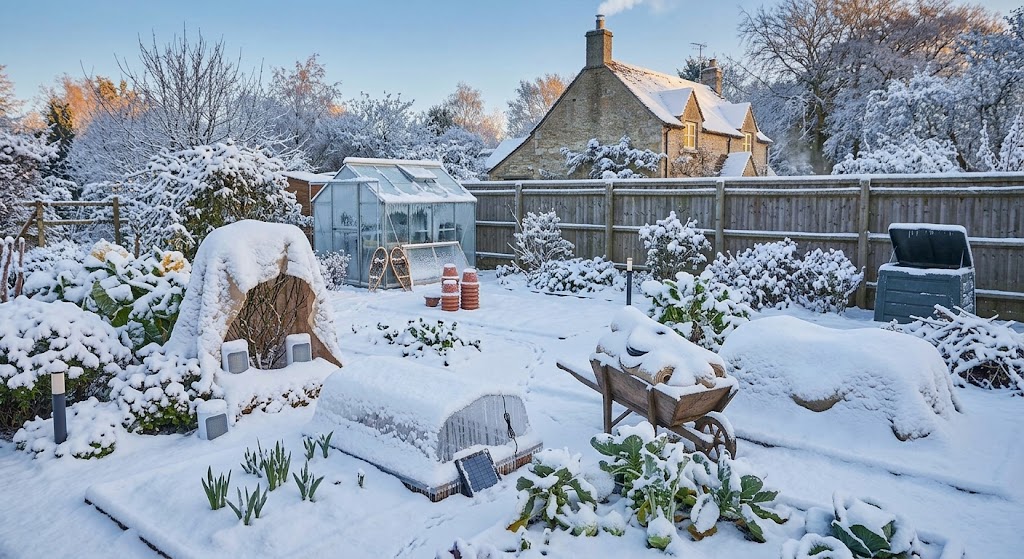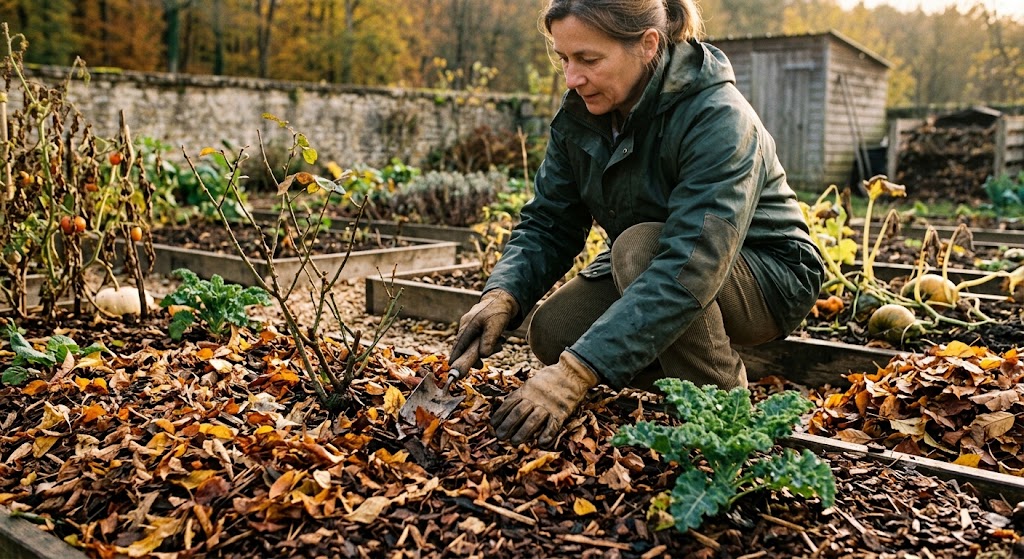
Fall mulching is one of the most effective (and cheapest) actions to prepare your garden for winter. It protects the roots from the cold, limits soil erosion, reduces weeds in spring and gradually improves the structure of the soil. You still need to choose the right type of mulch according to your needs.
Here is a clear guide to avoid making mistakes again.
Why mulch in autumn rather than spring?
In autumn, the ground is still warm and rains are more frequent. Mulching:
- Protects roots from temperature variations and frost
- Prevents the earth from settling under torrential rains
- Gradually nourishes the soil as it decomposes over winter
- Limits leaching of nutrients
It is therefore an investment that pays off the following spring.
The different types of mulch and their uses
1. Pine bark
It is the most common and versatile mulch. It decomposes slowly (2 to 3 years), limits weeds well and has a neat appearance.
Ideal for: shrub beds, hedges, heather plants (hydrangeas, rhododendrons, camellias, etc.).
Warning: it slightly acidifies the soil, which is not necessarily a problem, but should be taken into account.
THE Naturen Pine bark mulch 40 L is a safe bet, easy to find and effective.
2. Linen sequins
Finer and lighter than bark, they decompose more quickly and further enrich the soil. They are very suitable for vegetable gardens and perennial beds.
Advantage: they stick together from the first rain and resist the wind better.
3. Cocoa shells
Very decorative (dark brown color) and lightly scented, they are rich in magnesium. They decompose in 8 to 12 months and are particularly appreciated at the foot of rose bushes.
Disadvantage: a little more expensive and sometimes attract cats (who can confuse them with litter).
4. BRF (Fragmented Raméal Wood)
These are young crushed branches. It is the most interesting mulch in the long term to improve the life of the soil. It decomposes quite quickly and strongly stimulates biological activity.
Ideal for: vegetable garden, orchard, flowerbeds that you want to enrich sustainably.
Tip: don’t bury it, leave it on the surface.
5. Dead leaves
Free and excellent. They make perfect mulch, especially if you grind them a little (with the mower). They decompose quickly and nourish the soil very well.
Avoid only on plants sensitive to excessive humidity (certain evergreen perennials).
How to choose according to your situation?
| Main objective | Mulching recommended | Approx. lifespan |
|---|---|---|
| Aesthetic + long-lasting | Pine bark | 2-3 years |
| Vegetable garden + soil enrichment | BRF or linen sequins | 6-18 months |
| Rose bushes / decorative aspect | Cocoa shells | 8-12 months |
| Zero budget | Dead leaves | 6-12 months |
| Heather Earth Plants | Pine bark | 2-3 years |
How to install it correctly
- Weed carefully beforehand.
- Lightly water the soil if it is dry.
- Spread a layer of 5 to 7 cm (3-4 cm is enough for linen sequins).
- Leave a small free space around the collar of the plants (2-3 cm) to avoid rot.
- Water lightly after installation to stabilize the mulch.
Mistakes to avoid
- Apply a layer that is too thin (less than 4 cm) → ineffective against weeds
- Glue the mulch against the stems
- Using fresh, uncomposted bark in too large quantities (risk of temporary nitrogen starvation)
- Mulch already soggy soil
In summary
- You want something durable and aesthetic → pine bark
- You want to enrich the soil quickly → BRF or linen sequins
- You have a limited budget → dead leaves
- Are you looking for a beautiful appearance for rose bushes → cocoa shells
Fall mulching is one of the rare actions that requires little effort, little money, and which brings visible benefits the following spring.